New aircraft on display
Two new aircraft are now on permanent display at the MAM
Two new aircraft are now on permanent display at the MAM
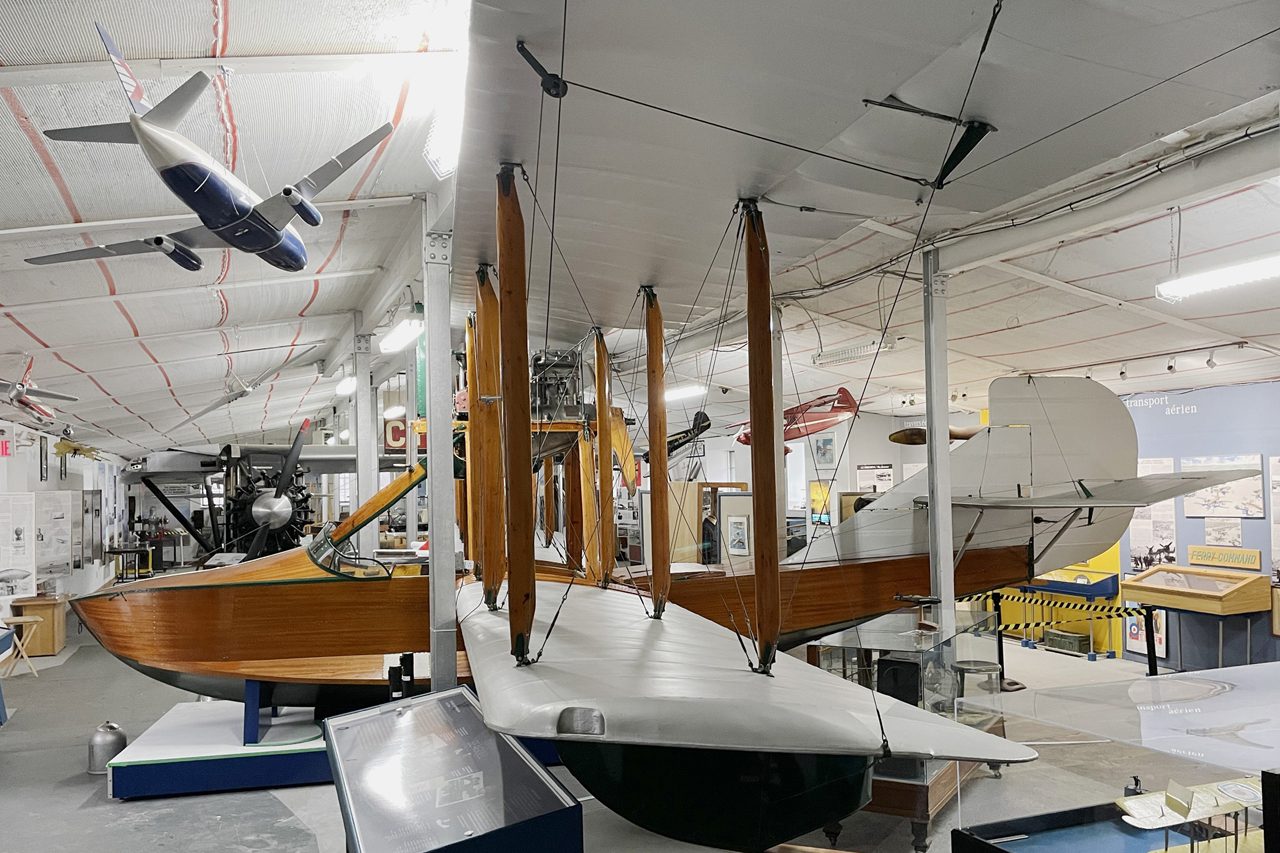
The Curtiss seagull flying boat was based on the model MF, a two-seat trainer developed from the US Navy during the First World War. Hoping to find a civilian market for the MF after the war, Curtiss made improvements and added extra seats. The seagull was considered the best single engine flying boat in its class, but it was not a commercial success- earlier Curtis aircraft, including surplus MFs, were abundant and affordable. Only about 100 MFs and roughly 15 seagulls were ever built.
This aircraft was named Eleanor III and used by an American, Alexander Rice, to lead an expedition exploring rivers in northwestern Brazil 192-1925. 1924. In 1926, he donated his seagull to the Science Museum in London, England. Which, in turn, loaned aircraft to Canada’s National Aircraft Collection in 1968. The loan became a permanent gift in 1971 and the Seagull was restored and unveiled in 1974. In 2024 it was donated to the Montreal Aviation Museum.
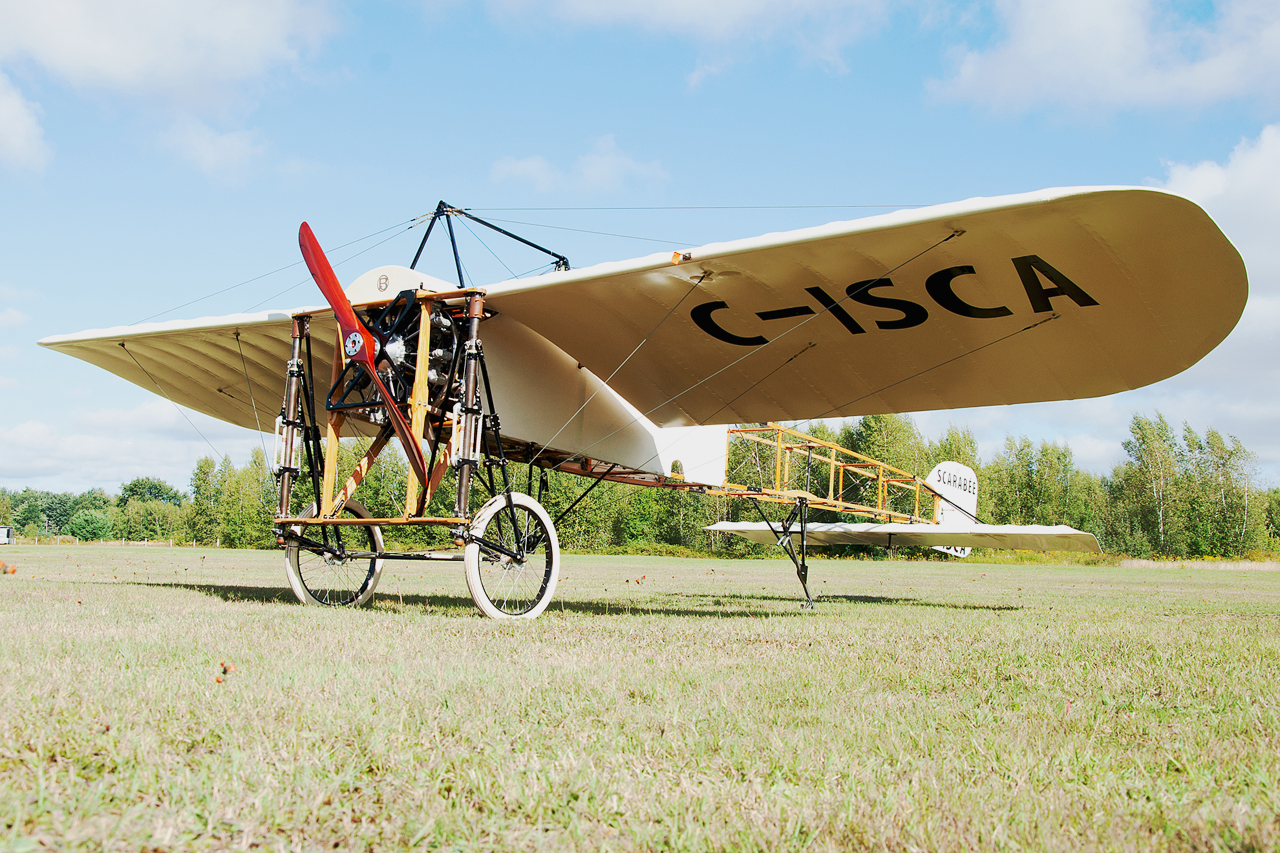
The Blériot XI is a single-engine monoplane designed by Louis Blériot and Raymond Saulnier of France.
Its first flight was on January 23, 1909, near Paris, France and Louis Blériot became the first person to fly across the English Channel in this aircraft type on July 25, 1909.
It became a popular trainer and military aircraft and many replicas still fly to this day.
The museum’s example is a full-scale reconstruction based on original drawings and depicts “Le Scarabée”, the first aircraft to fly over the city of Montréal in July 1910, flown by another famous French aviator – Count Jacques de Lesseps.
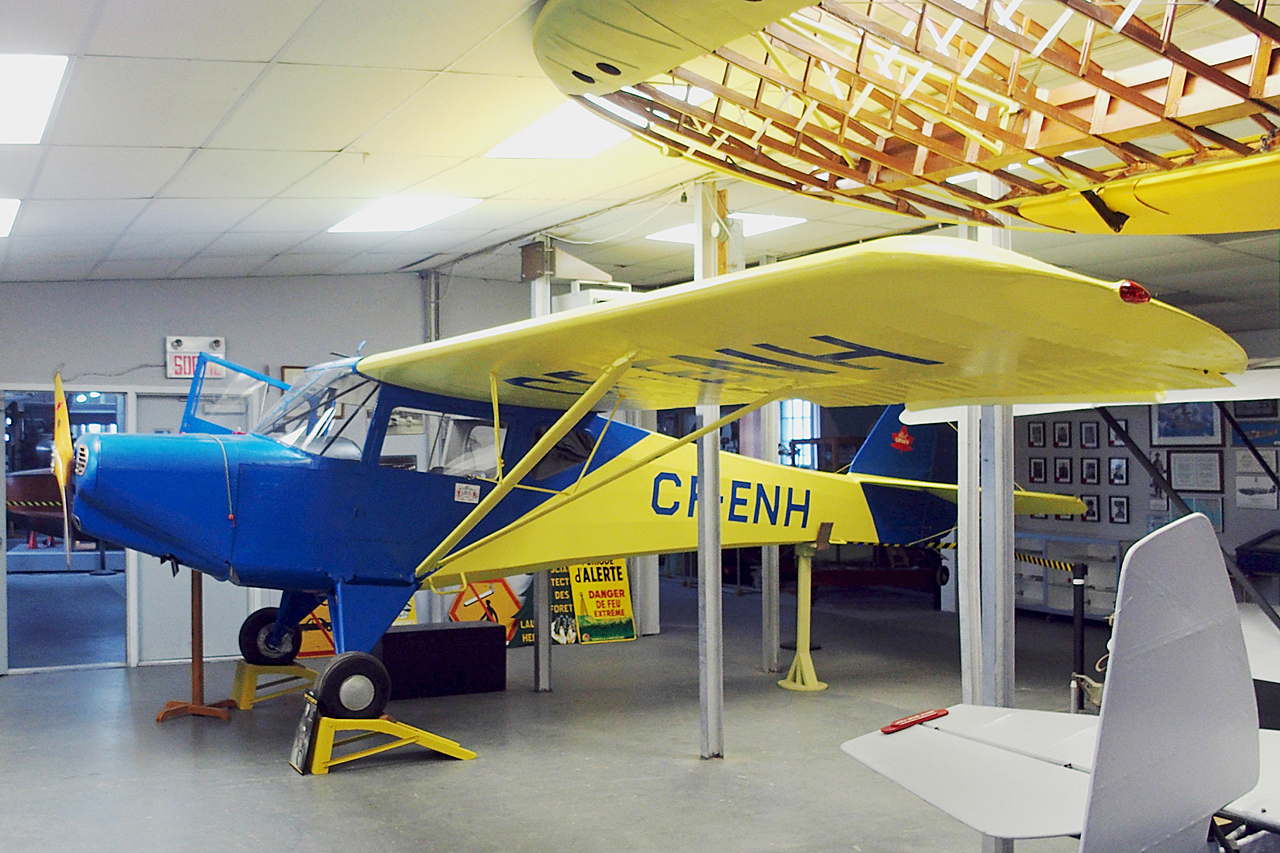
The Fleet Model 80 Canuck is a Canadian designed high-wing light aircraft featuring two seats in a side-by-side configuration.
The aircraft was designed by Omer (Bob) Noury, an aeronautical engineer from Trois-Rivières, Quebec, who had previously designed the Noury N-75 before selling its design to the Fleet Aircraft Company in Stoney Creek, Ontario.
The first flight occurred in 1944 and the aircraft became popular as a trainer, for personal use and for light commercial use. A total of 225 Canucks were built, mostly between 1945 and 1947 by the Fleet Aircraft Company.
The museum’s example is an original Canuck restored by the museum’s volunteers.
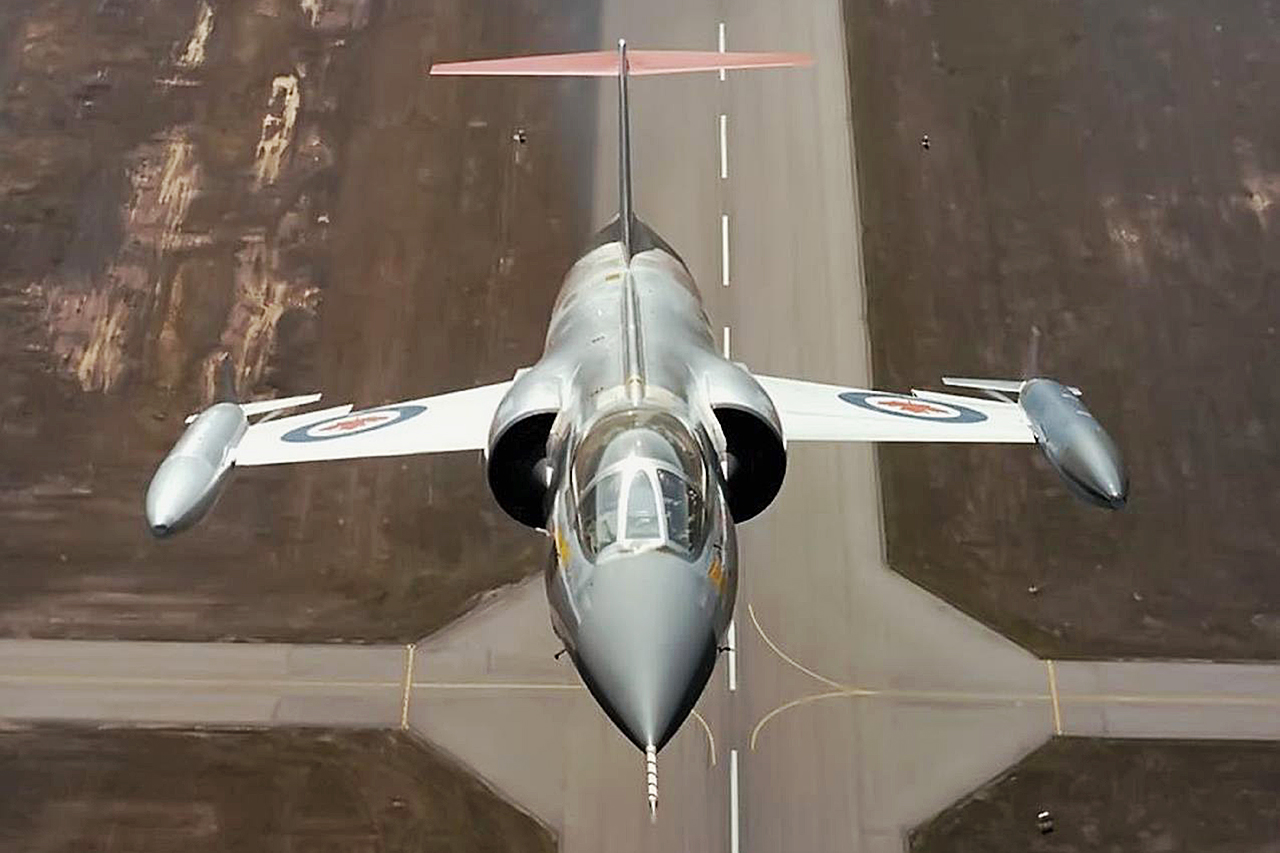
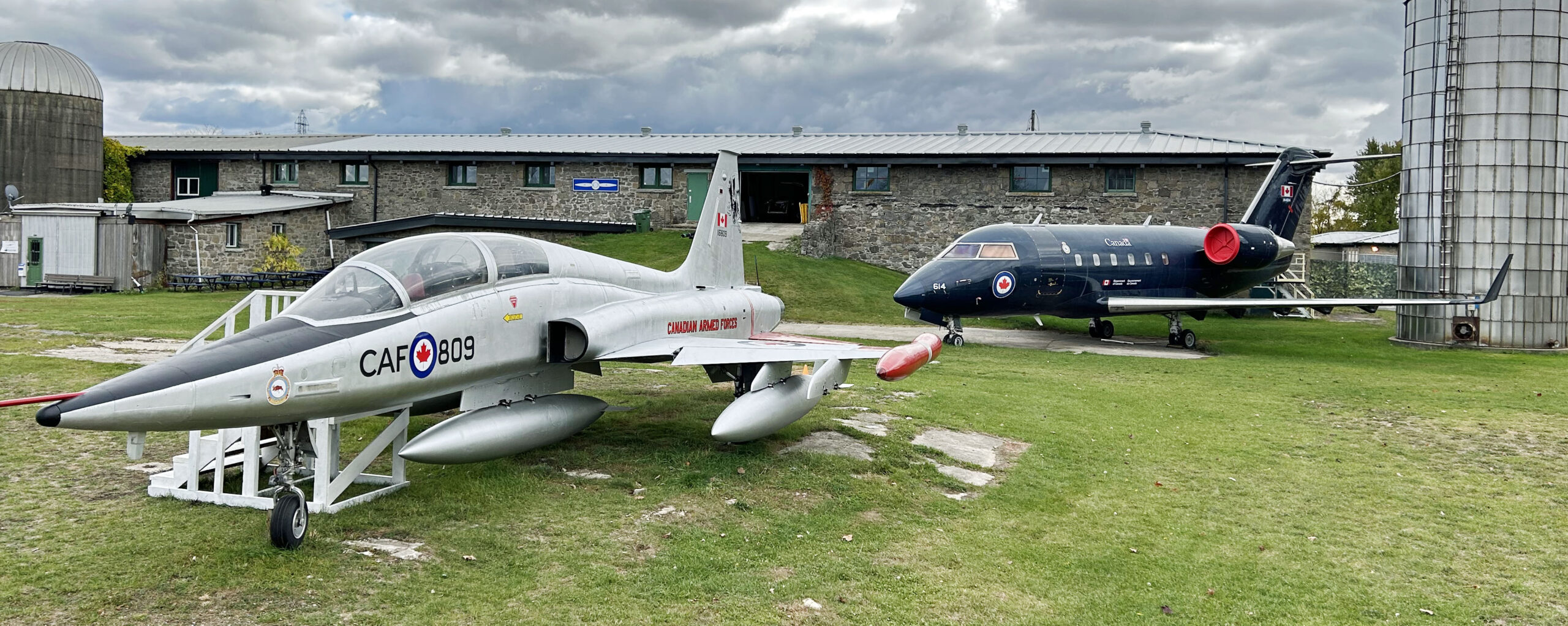
The CF-104 Starfighter was a single engine supersonic fighter-interceptor built under licence by Canadair of Cartierville, Québec, based on an original design by Lockheed Aircraft in the U.S.A.
It first entered service In the RCAF in March 1962, and as part of Canada’s commitment to NATO, eight Squadrons were stationed in Europe. It was used primarily as a ground attack aircraft in support of troops but also had a nuclear strike role in the event of a conflict with Warsaw Pact forces.
Two hundred of these were built before it was retired from service in 1987 and replace by the CF-18.
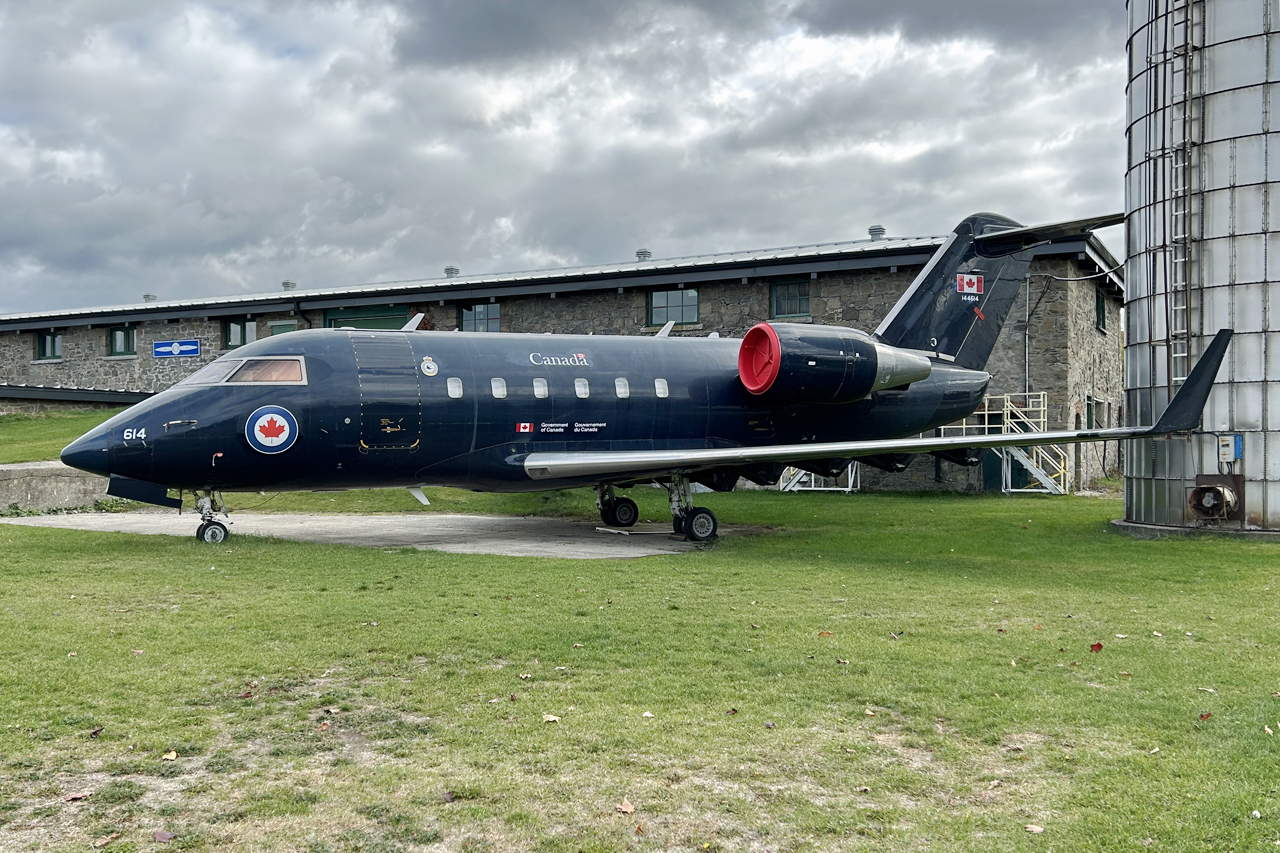
Based on the Canadair Challenger 600 series of business jets, the CC 144B is the military version of the Challenger 601, configured to meet the needs of the Canadian Armes Forces (CAF, now the Royal Canadian Air Force).
It was used primarily to transport government officials and foreign dignitaries as well as in a supporting role for humanitarian operations, medical evacuations, and military operations in Canada and around the world.
The first prototype of the Challenger 600 rolled out on May 25, 1978, and its maiden flight was accomplished later that year on November 8. It was certified by Transport Canada on August 10, 1980.
In 1982, twelve Challengers were purchased by the CAF, with an additional seven from 1982 to 2020. The MAM’s aircraft was manufactured in January 1985 by Canadair before Bombardier Aerospace purchased the aircraft manufacturer in 1986.
The Curtiss seagull flying boat was based on the model MF, a two-seat trainer developed from the US Navy during the First World War. Hoping to find a civilian market for the MF after the war, Curtiss made improvements and added extra seats. The seagull was considered the best single engine flying boat in its class, but it was not a commercial success- earlier Curtis aircraft, including surplus MFs, were abundant and affordable. Only about 100 MFs and roughly 15 seagulls were ever built.
This aircraft was named Eleanor III and used by an American, Alexander Rice, to lead an expedition exploring rivers in northwestern Brazil 192-1925. 1924. In 1926, he donated his seagull to the Science Museum in London, England. Which, in turn, loaned aircraft to Canada’s National Aircraft Collection in 1968. The loan became a permanent gift in 1971 and the Seagull was restored and unveiled in 1974. In 2024 it was donated to the Montreal Aviation Museum.
The Blériot XI is a single-engine monoplane designed by Louis Blériot and Raymond Saulnier of France.
Its first flight was on January 23, 1909, near Paris, France and Louis Blériot became the first person to fly across the English Channel in this aircraft type on July 25, 1909.
It became a popular trainer and military aircraft and many replicas still fly to this day.
The museum’s example is a full-scale reconstruction based on original drawings and depicts “Le Scarabée”, the first aircraft to fly over the city of Montréal in July 1910, flown by another famous French aviator – Count Jacques de Lesseps.
The Fleet Model 80 Canuck is a Canadian designed high-wing light aircraft featuring two seats in a side-by-side configuration.
The aircraft was designed by Omer (Bob) Noury, an aeronautical engineer from Trois-Rivières, Quebec, who had previously designed the Noury N-75 before selling its design to the Fleet Aircraft Company in Stoney Creek, Ontario.
The first flight occurred in 1944 and the aircraft became popular as a trainer, for personal use and for light commercial use. A total of 225 Canucks were built, mostly between 1945 and 1947 by the Fleet Aircraft Company.
The museum’s example is an original Canuck restored by the museum’s volunteers.
– Antoine de Saint-Exupery
Two new aircraft are now on permanent display at the MAM
The Curtiss seagull flying boat was based on the model MF, a two-seat trainer developed from the US Navy during the First World War. Hoping to find a civilian market for the MF after the war, Curtiss made improvements and added extra seats. The seagull was considered the best single engine flying boat in its class, but it was not a commercial success- earlier Curtis aircraft, including surplus MFs, were abundant and affordable. Only about 100 MFs and roughly 15 seagulls were ever built.
This aircraft was named Eleanor III and used by an American, Alexander Rice, to lead an expedition exploring rivers in northwestern Brazil 192-1925. 1924. In 1926, he donated his seagull to the Science Museum in London, England. Which, in turn, loaned aircraft to Canada’s National Aircraft Collection in 1968. The loan became a permanent gift in 1971 and the Seagull was restored and unveiled in 1974. In 2024 it was donated to the Montreal Aviation Museum.
The Blériot XI is a single-engine monoplane designed by Louis Blériot and Raymond Saulnier of France.
Its first flight was on January 23, 1909, near Paris, France and Louis Blériot became the first person to fly across the English Channel in this aircraft type on July 25, 1909.
It became a popular trainer and military aircraft and many replicas still fly to this day.
The museum’s example is a full-scale reconstruction based on original drawings and depicts “Le Scarabée”, the first aircraft to fly over the city of Montréal in July 1910, flown by another famous French aviator – Count Jacques de Lesseps.
The Fleet Model 80 Canuck is a Canadian designed high-wing light aircraft featuring two seats in a side-by-side configuration.
The aircraft was designed by Omer (Bob) Noury, an aeronautical engineer from Trois-Rivières, Quebec, who had previously designed the Noury N-75 before selling its design to the Fleet Aircraft Company in Stoney Creek, Ontario.
The first flight occurred in 1944 and the aircraft became popular as a trainer, for personal use and for light commercial use. A total of 225 Canucks were built, mostly between 1945 and 1947 by the Fleet Aircraft Company.
The museum’s example is an original Canuck restored by the museum’s volunteers.
The CF-104 Starfighter was a single engine supersonic fighter-interceptor built under licence by Canadair of Cartierville, Québec, based on an original design by Lockheed Aircraft in the U.S.A.
It first entered service In the RCAF in March 1962, and as part of Canada’s commitment to NATO, eight Squadrons were stationed in Europe. It was used primarily as a ground attack aircraft in support of troops but also had a nuclear strike role in the event of a conflict with Warsaw Pact forces.
Two hundred of these were built before it was retired from service in 1987 and replace by the CF-18.
Based on the Canadair Challenger 600 series of business jets, the CC 144B is the military version of the Challenger 601, configured to meet the needs of the Canadian Armes Forces (CAF, now the Royal Canadian Air Force).
It was used primarily to transport government officials and foreign dignitaries as well as in a supporting role for humanitarian operations, medical evacuations, and military operations in Canada and around the world.
The first prototype of the Challenger 600 rolled out on May 25, 1978, and its maiden flight was accomplished later that year on November 8. It was certified by Transport Canada on August 10, 1980.
In 1982, twelve Challengers were purchased by the CAF, with an additional seven from 1982 to 2020. The MAM’s aircraft was manufactured in January 1985 by Canadair before Bombardier Aerospace purchased the aircraft manufacturer in 1986.
The Curtiss seagull flying boat was based on the model MF, a two-seat trainer developed from the US Navy during the First World War. Hoping to find a civilian market for the MF after the war, Curtiss made improvements and added extra seats. The seagull was considered the best single engine flying boat in its class, but it was not a commercial success- earlier Curtis aircraft, including surplus MFs, were abundant and affordable. Only about 100 MFs and roughly 15 seagulls were ever built.
This aircraft was named Eleanor III and used by an American, Alexander Rice, to lead an expedition exploring rivers in northwestern Brazil 192-1925. 1924. In 1926, he donated his seagull to the Science Museum in London, England. Which, in turn, loaned aircraft to Canada’s National Aircraft Collection in 1968. The loan became a permanent gift in 1971 and the Seagull was restored and unveiled in 1974. In 2024 it was donated to the Montreal Aviation Museum.
The Blériot XI is a single-engine monoplane designed by Louis Blériot and Raymond Saulnier of France.
Its first flight was on January 23, 1909, near Paris, France and Louis Blériot became the first person to fly across the English Channel in this aircraft type on July 25, 1909.
It became a popular trainer and military aircraft and many replicas still fly to this day.
The museum’s example is a full-scale reconstruction based on original drawings and depicts “Le Scarabée”, the first aircraft to fly over the city of Montréal in July 1910, flown by another famous French aviator – Count Jacques de Lesseps.
The Fleet Model 80 Canuck is a Canadian designed high-wing light aircraft featuring two seats in a side-by-side configuration.
The aircraft was designed by Omer (Bob) Noury, an aeronautical engineer from Trois-Rivières, Quebec, who had previously designed the Noury N-75 before selling its design to the Fleet Aircraft Company in Stoney Creek, Ontario.
The first flight occurred in 1944 and the aircraft became popular as a trainer, for personal use and for light commercial use. A total of 225 Canucks were built, mostly between 1945 and 1947 by the Fleet Aircraft Company.
The museum’s example is an original Canuck restored by the museum’s volunteers.
– Antoine de Saint-Exupery